

Use the video to start practice, not to certify language
A short rap video can provide a memorable situation for language practice when the words and pronunciation are checked independently. Choose one small learning target, use a verified transcript of the actual audio, and compare the rhythmic delivery with an ordinary spoken version. Generated performance is a creative prompt, not an authority on grammar, accent, or meaning. The learner should know which material is approved for imitation and which is simply visual inspiration.
Keep the task narrow enough that the learner can finish it and explain what they practiced. Useful targets might include introducing a place, asking one practical question, or contrasting two familiar expressions. 'Learn conversational language through rap' is too broad for one short clip. A specific phrase in a clear situation gives the reviewer something concrete to check and makes it easier to notice when a rhyme has distorted a meaning the learner needs in ordinary conversation.
Choose the situation before choosing the rhyme
Write the situation in the learner's strongest language first. Who is speaking, to whom, and for what purpose? A person introducing their neighborhood to a visiting friend uses a different register from an announcer inviting a crowd to respond. Decide whether the phrase should sound casual, respectful, playful, or formal. Ask a competent speaker or teacher to confirm that the chosen expression fits that relationship rather than merely translating each word in isolation.
Select vocabulary that the learner can explain without the video. If a line contains several unfamiliar idioms, a pun, and a regional reference, it may be an interesting cultural discussion but a poor first imitation exercise. Remove anything included only to complete a rhyme. The musical form should support the learning target, not force the target into unnatural wording. Keep a plain-language meaning beside the phrase during preparation, even if that explanation does not appear on the finished visual.
Establish an ordinary spoken reference
Ask a fluent speaker or appropriate instructor to review the intended line and provide or approve a natural spoken version. Confirm the intended meaning, social context, and pronunciation. If several varieties of the language are relevant, name the reference variety rather than implying that one delivery is the only correct form. A learner benefits from knowing what they are hearing and where it fits, especially when rhythmic emphasis differs from ordinary speech.
Keep the natural spoken reference distinct from the rap performance. Musical delivery may stretch a vowel, compress a syllable, shift emphasis, or use an expressive voice. Those choices can be artistically appropriate while being unsuitable as the learner's only model for a routine interaction. The exercise should therefore move between meaning, ordinary speech, and rhythm. Do not claim that copying the generated cadence will automatically produce natural everyday pronunciation or demonstrate a particular level of language competence.
Generate a scene that makes the meaning visible
Choose a simple visual setting related to the phrase. A greeting can happen at an imagined doorway; a description of a neighborhood can use a calm street scene; an invitation can show a fictional gathering space. The picture should give the learner a reason to speak rather than introduce unrelated spectacle. Avoid generated signs carrying essential vocabulary, since the written text may be unreliable and difficult to correct across frames.
AI Rap Video Plus creates scenes from a text brief and optional reference image, with generated audio. It does not guarantee exact lyrics or precise lip synchronization. Review the available settings and credit quote before submission, then judge the actual output rather than assuming the intended teaching line was delivered correctly. Add any instructional text or captions in an external editor. If exact language is central, use a separately checked recording in the final external assembly and treat the generated picture as illustration.
A proposed practice task about a familiar place
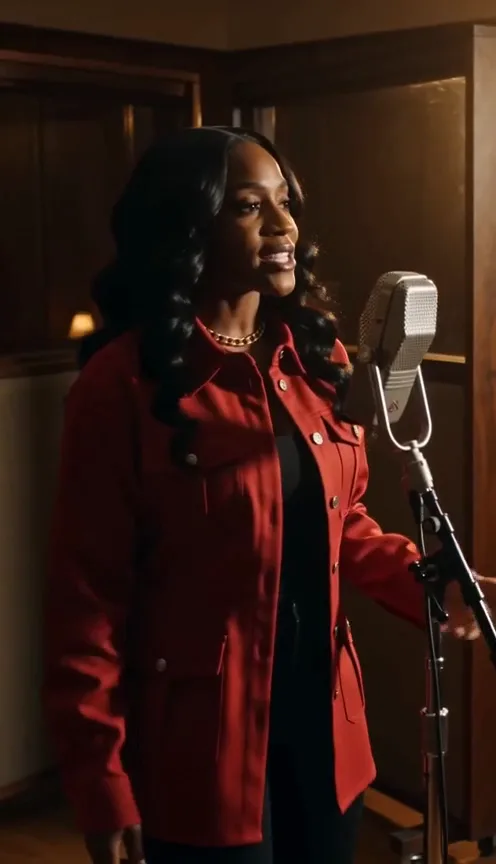
Imagine an intermediate learner practicing a brief description of a neighborhood meeting spot. The target is to express where they like to meet friends and why, using a teacher-approved sentence. A proposed visual shows an original performer beside a small courtyard bench, with a restrained gesture toward the shared space. The learner's task is not to memorize every generated sound. It is to connect the checked phrase with a concrete conversational situation.
The practice package would include the approved sentence, a short explanation of its meaning, a natural spoken reference, and an optional rhythmic version reviewed by the same language helper. The learner first says the ordinary sentence, then tries the rhythm, and finally adapts one detail to describe a real place they know. This example is a suggested exercise, not evidence of a completed lesson or learning result. The final adaptation tests whether the learner understands the expression beyond its musical pattern.
Transcribe the audio you actually use
Listen carefully to the selected soundtrack and write what is audible. Do not caption the intended prompt as though the model certainly spoke it. Check omissions, inserted sounds, names, and words whose boundaries become unclear at speed. If the line is ambiguous, ask the reviewer to listen before deciding whether the clip is suitable. It is better to replace an unreliable teaching example than to ask the learner to ignore a sound that changes the phrase's meaning.
Keep the transcript and explanation aligned. A grammatical correction may be useful in a lesson note, but it should not silently replace the words in captions while different words are heard. Label an intended correction explicitly or use a corrected recording. When preparing translations, have the reviewer check the whole expression rather than matching dictionary equivalents word by word. A rhyme can carry a tone or implication that a literal translation misses, so the meaning deserves a separate review from the spelling.
Practice in three short passes
Begin with understanding. The learner explains the situation and paraphrases the sentence's meaning before imitating the delivery. Next, practice the ordinary spoken reference at a manageable pace, with feedback on the chosen target rather than every possible feature of their accent. Finally, try the rhythmic version for expression and timing. The learner can return to ordinary speech afterward to check that the musical pattern has not become necessary for recalling the phrase.
Keep the practice responsive. If the words become less intelligible when the learner follows the beat, remove the beat temporarily. If the phrase is clear but the social context is uncertain, discuss who would naturally say it and when. Do not turn every difficulty into a demand for more speed. The exercise is successful when the learner can use the expression meaningfully, even if their rhythmic performance remains simple. Record only with the participant's agreement and make the purpose of any shared example clear.
Ask the learner to change one real detail
After practicing the original, ask the learner to replace a place, reason, or activity while preserving the sentence's useful structure. Have the language helper check the adapted version. This small variation reveals whether the learner understands which words can change and which relationships must remain. A person who reproduces a catchy line may still need help constructing a new one; the adaptation gives that need a visible and manageable form.
Use the visual as a prompt rather than a script during this pass. Hide the full caption if appropriate for the exercise, show the scene, and ask for a related sentence. Restore the text when it is helpful. Avoid describing this informal activity as a validated assessment. It is a review tool for the learner and helper, designed to expose confusion and guide the next practice step. Keep notes about the specific expression instead of assigning broad claims about fluency from a short performance.
Review cultural context and participant comfort
Check whether gestures, clothing, slang, and the scene's social cues fit the intended lesson. A phrase may be linguistically understandable yet inappropriate in the imagined relationship. Avoid using a caricatured accent or a borrowed cultural identity simply to make the clip seem more recognizably rap. An original visual and respectful language reference can create a lively exercise without pretending to represent an entire community through one synthetic performer.
For a group activity, explain that participants can choose an ordinary spoken version rather than perform musically. Some learners may enjoy rhythm while others prefer a quieter rehearsal. Keep feedback focused on the agreed target and avoid public comparisons that discourage participation. Before sharing a learner recording, confirm the participant's permission and the intended audience. The activity's creative appeal should support a comfortable practice environment, not turn a private language experiment into an unexpected promotional asset.
Questions about accuracy and progress
Can a learner use generated audio without a language reviewer? They can explore it as media, but should avoid treating uncertain wording or pronunciation as an approved learning model. A checked recording is especially important when the target is unfamiliar or meaning-sensitive. Does rap pronunciation replace everyday pronunciation practice? No single performance style should carry that burden. Compare the rhythmic version with ordinary speech and discuss what changes between them.
How should the learner decide what to practice next? Review the specific task: could they explain the meaning, use the phrase in the intended relationship, and adapt one detail accurately? Choose the next exercise from the remaining difficulty rather than generating a longer or faster verse by default. A small, well-understood expression gives the learner something reusable. The video contributes a situation and an engaging memory cue, while accurate language and thoughtful feedback remain the foundation of the practice.