

Decide what usable means before comparing takes
Choose a rap video take by separating requirements that must pass from creative qualities that can trade against one another. First reject results that cannot serve the intended edit. Then compare the remaining takes against a few stated priorities. This approach gives a beautiful but unsuitable clip less power to derail the project, while allowing an imperfect-looking preview to reveal a genuinely useful performance.
A review rubric is a decision aid, not a scientific measurement of artistic quality. The numbers represent your priorities. They do not prove that a particular model is better, predict audience response, or turn personal taste into an objective fact. Its practical value is that you can explain why you selected a take and recognize when another attempt would answer no useful question.
Set the rubric for one shot with one job. An opener that must establish a release title needs different priorities from a close-up carrying a vulnerable line. If you judge both with the same generic score, the detailed performance may lose to an impressive background even though the background contributes little to the actual sequence. Write the shot’s role above the scoring sheet.
Put hard requirements before attractive details
Hard requirements are conditions that prevent publication or make the planned edit impossible. They might include an approved depiction, a readable face during the essential moment, an uninterrupted usable interval, or the absence of a conspicuous visual failure in the exact crop. A file that does not play correctly also needs a technical decision before creative scoring matters.
Keep these requirements narrow. “The whole clip must be flawless” is rarely a workable acceptance condition for an experimental AI-assisted visual. Specify the region and interval that the audience will actually see. A fault outside the selected edit may be irrelevant, while a brief face change during the central performance can be decisive. Judge the intended output honestly rather than ignoring problems because they are inconvenient.
Separate the status of the job from your creative opinion. A completed generation can be creatively unusable; that does not automatically mean the submission failed technically or qualifies for a particular refund. A pending or ambiguous submission needs status clarification before another billable request. Record the actual state and follow the available account or support process instead of treating the review rubric as a billing policy.
Weight only the qualities that affect this shot
Choose three or four creative priorities after the hard gate. For a calm introduction, you might allocate four importance points to performance readability, three to framing, two to continuity, and one to atmosphere. These are proposed editorial weights, not measured industry benchmarks. The unequal emphasis makes it clear that a rich background should not compensate for an unreadable performer.
Use a small score range with written meanings. For example, a low framing score could mean that the performer repeatedly leaves the intended crop; a middle score could mean the framing is usable with a modest edit; a high score could mean the composition supports both the performance and planned text throughout the selected interval. Anchors make a score easier to discuss than an unexplained number.
Avoid adding a category for every detail you notice. A sheet with many overlapping categories can count the same strength several times. “Mood,” “vibe,” and “cinematic quality” may all reflect the same lighting preference. Combine them or write the actual observation. If a category cannot change your choice or next action, remove it. The point is to reduce uncertainty, not to manufacture a complicated verdict.
Use a repeatable viewing order
Start by watching each candidate at normal speed with the intended audio. Write a single sentence about what the performance communicates. This protects the overall impression from being overwhelmed by tiny details found only through obsessive pausing. Then watch the intended crop on a phone-sized display and note whether the central action remains legible.
On the second pass, inspect the selected interval more closely. Look at face stability, hands interacting with objects, background edges near the body, and the beginning and ending of movements. Pause where a suspected problem occurs, but return to normal playback to assess whether it affects the viewing experience. A strange intermediate frame and a distracting visible event are related, but they are not always the same editorial problem.
Finally, put the candidate into a rough external edit. Add temporary title placement and neighboring shots if those elements determine usability. A clip can look excellent alone and fail at the transition because the performer’s direction or energy changes abruptly. Save that rough assembly separately so your scoring refers to a reproducible context rather than a memory of several different previews.
Compare an original late-night performance example
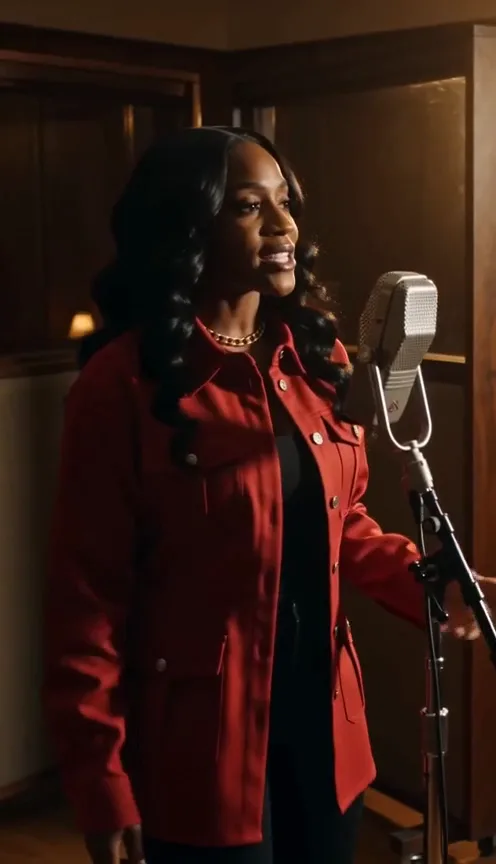
Imagine three proposed takes for a verse in a small radio booth. Candidate A has expressive hands and warm atmosphere, but the performer’s face changes during the line you need. Candidate B has a simpler background, stable framing, and a restrained delivery. Candidate C has the most dramatic camera motion, but it leaves no useful landing for the title. These are hypothetical review situations, not results from a completed generation test.
If face continuity during that line is a hard condition, A stops at the gate. If the title must occupy the final portion, C may also fail, unless an external edit can honestly solve the issue without compromising the scene. B could become the selected take despite being less spectacular in isolation. The rubric explains the choice through the shot’s task rather than through a general claim that simpler footage is always superior.
Now change the assignment: suppose this is a text-free cutaway used briefly between two performances. C might become viable because its dramatic motion has a clear transitional job. The rubric should change when the purpose changes. Do not keep adjusting the purpose merely to justify a favorite, however. Write the revised assignment explicitly and check that the new role still belongs in the video.
Reduce comparison bias without pretending taste disappears
Rename review copies A, B, and C, and hide the prompt or generation order until the first comparison is complete. Knowing that a take cost more or came from your newest prompt can influence your judgment. A blind comparison will not eliminate preference, but it can help you notice that an older candidate serves the edit just as well.
When another person reviews the takes, give them the shot’s promise and hard requirements, then ask for observations before showing your scores. Ask which moment draws attention and whether that attention serves the line. Do not ask only which version looks best. That broad question encourages the reviewer to invent criteria you may not share.
If scores differ, discuss the observation underneath the number. One reviewer may value a slight head turn because it feels conversational; another may see it as loss of audience connection. Either reading can be reasonable. Resolve the difference against the intended relationship with the viewer. Averaging the scores without discussing the disagreement can conceal the most useful creative information in the review.
Set a stopping rule that protects the budget
Before requesting another take, state what a new attempt should change and why that change matters. “Maybe something better will happen” is not a useful experiment. “The microphone hand interrupts the only clean title interval; I will simplify that action while preserving the framing” is a specific question. You can compare the next result against the same requirement.
Set a spending or attempt boundary based on the project, then distinguish exploratory work from delivery work. In AI Rap Video Plus, review the selected model, duration, resolution, and quoted credits before explicit submission. Do not hardcode a cost from memory into the review sheet. Record the actual quote and completed result so later decisions use the project’s real expenditure.
Stop when a candidate passes the essential conditions and the next plausible improvement would not change the edit’s purpose. You can also stop with no suitable candidate and redesign the shot. A simpler composition or different shot size may be more useful than repeatedly demanding the same difficult interaction. Stopping is a production decision, not an admission that the concept lacks value.
Run a short rubric rehearsal
Take two available candidates, or two rough storyboard versions if you have not generated yet. Write the shot’s role, two hard requirements, and three creative priorities. Score each version privately, then explain the choice without using the total. If the explanation contradicts the numbers, inspect whether the categories describe what actually matters.
What if both takes pass but neither feels right? Write the missing quality as an observable behavior, such as a calmer opening stance or a clearer change in expression. If you cannot describe it, ask for a second reading before paying for more footage. What if one take has a recoverable flaw? Test the proposed repair in an external editor rather than assuming cropping or retiming will solve it.
Keep the selected interval, the review note, and the reason for stopping beside the chosen file. A later collaborator can then understand which part is approved and which limitations remain. Reuse the review method on the next shot, but rewrite the priorities. Consistent review comes from a stable process of observation and decision; every scene does not need the same scorecard.
Keep review copies separate from source files so renaming candidates never loses the original record. If a later editor needs the full downloaded take, they should be able to trace candidate B back to its actual file and selected interval. That trace also helps you reconsider an earlier decision when the sequence changes, without pretending the earlier choice was mistaken for its original purpose.