

Start with the decision the brief must enable
A rap video director’s brief should let another person make useful decisions without guessing what you mean. Give the collaborator one audience promise, a small set of visual priorities, the production boundaries, and the exact work you expect to review. A mood board alone cannot do that. Beautiful references can agree on color while disagreeing completely about performance, pacing, and the intended audience.
For an independent musician commissioning a short AI-assisted visual, the brief is also a spending tool. It separates an idea worth exploring from a finished asset worth approving. You can approve a proposed scene before authorizing generation, then approve a particular output before paying for a larger edit. Those are different decisions, and writing them down prevents a promising sketch from quietly becoming an expensive obligation.
Begin with the collaborator’s immediate question: what do I need to bring back? The answer might be two written scene directions, one generated performance candidate, or an assembled teaser made from already approved footage. Choose one. If you ask for a polished video while actually wanting to explore the look, every review becomes an argument about the wrong stage of work.
Write a promise that contains a viewer and a change
A useful single-sentence promise describes what a viewer should understand or feel after the clip. “Make it cinematic” describes a preference without giving anyone a decision rule. “Make listeners feel they have entered the quiet room where this confident verse was written” supplies a relationship between the viewer, the performance, and the setting. A collaborator can use that relationship to choose between a restrained push toward the performer and a showy aerial move.
Include the release context without turning the promise into a marketing paragraph. A visual announcing a new single must make the song and its availability understandable. A visual accompanying a reflective verse can leave more room for atmosphere. Write which task comes first when they compete. If recognition matters most, the face or recognizable wardrobe should remain readable even when the room is dramatic.
Then add one exclusion that protects the concept. For the quiet-room idea, you might write that the performance should feel assured rather than aggressive, with no crowd or stage spectacle. This is a creative boundary for the human team. It is not a claim that a negative instruction will reliably control a model. The collaborator still has to inspect what the generation actually produces and judge it against the promise.
Turn references into usable observations
Give each reference a job. One image might show the relationship between the face and the background. Another might explain the intended amount of empty wall around a title. A short video might demonstrate a restrained gesture. State what should be borrowed at the level of a visual mechanism, rather than asking for an indistinguishable copy of an artist, campaign, or existing character.
For each reference, write one sentence beginning with a concrete observation. “The performer is brighter than the wall, so the expression remains the first thing we notice” is more useful than “love this vibe.” Also write what should not carry across. You may want the uncluttered framing without the reference’s wardrobe, celebrity likeness, recognizable set, or branded objects. That distinction helps a collaborator build something original.
Keep the reference set small enough to discuss in one conversation. If two references imply different choices, name the conflict instead of hoping the collaborator will resolve it invisibly. A reference with tight handheld energy and another with a static symmetrical frame can coexist if they belong to separate shots. They create confusion when both are presented as instructions for the same uninterrupted performance.
State constraints in the language of the actual workflow
List the inputs you can provide and their status: approved portrait, original cover artwork, final recording, draft title, or provisional release date. A filename is not proof that an asset is approved. Mark the owner and the person who can confirm permission to use each asset. This is practical production housekeeping; complicated rights questions need appropriate advice beyond a creative brief.
AI Rap Video Plus accepts a scene brief and an optional reference image, with available model, duration, and resolution choices shown in the studio. The selected settings and quoted credits should be reviewed before an explicit submission. Do not describe features the production does not have. If the project requires a final song recording on a timeline, precise captions, composited typography, or careful color adjustments, assign those steps to an external editor.
Describe uncertainty honestly. A reference image can guide the appearance without guaranteeing identical identity throughout a clip. A written lyric request does not guarantee exact wording or exact lip synchronization. If the published recording is essential, make the recording the editorial authority and design a visual workflow around it. The collaborator should know which requirements are mandatory and which are exploratory before any billable work begins.
Work through an original brief for a night-shift release
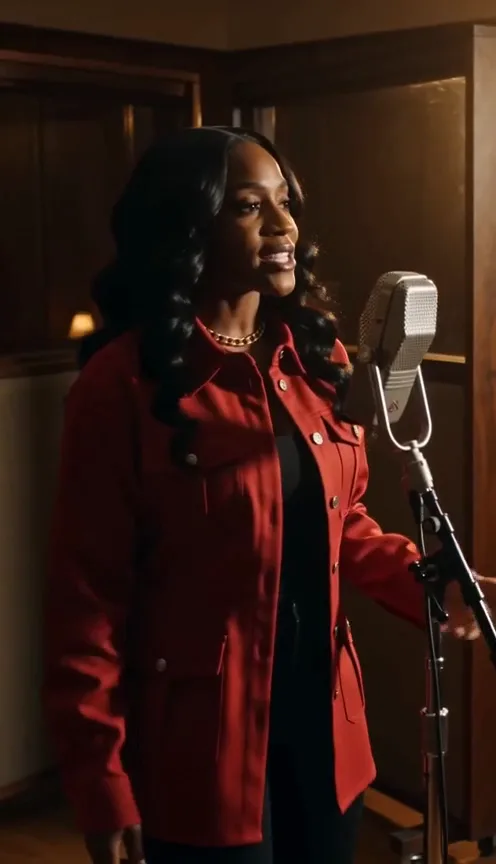
Consider a proposed single called “Last Train Home.” The intended viewer is someone hearing the artist for the first time on a phone. The promise is to make a late-night journey feel quietly triumphant. The proposed scene is an original, nearly empty waiting room: one performer in a rust-colored jacket, a pale wall, a bench in the background, and a steady medium shot. The performance uses one open-hand gesture rather than a sequence of precisely choreographed moves.
The brief could ask the collaborator to return one written alternative for the setting and one annotated frame plan before generation. Its review priorities are face readability, a calm but assured attitude, and usable space for the release title. A moving train outside the window would be optional atmosphere. It should not become a hard requirement that consumes repeated attempts while the performance itself remains weak.
The delivery request might specify the original downloaded generation, the chosen edited teaser, and a separate clean version without release text. The collaborator would prepare the edit and title in external software. The title and release date would be supplied as approved copy. This example is a planning proposal, not a report of a generated result, and its value is that each person can identify the next concrete decision.
Define review scope before you see a beautiful result
Agree on what each review can change. A concept review can change the location or emotional direction. A take review can accept or reject an available result. An edit review can change timing, text placement, and which usable portion appears. Asking for a new identity, new wardrobe, and new camera path during an edit review is a change in production scope, even if the request sounds small in a comment.
Use review notes that connect an observation to its consequence. “The hand crosses the title area during the release date” tells the editor what is affected. “It feels off” gives no next action. When a note involves taste, identify the preference directly: you may prefer a warmer room or a less confrontational expression. Do not turn a subjective preference into a technical fault simply to make it seem more authoritative.
Assign one person to consolidate feedback. Conflicting instructions from several reviewers can produce a clip that satisfies nobody. The brief should name who decides when comments disagree and which stage requires their sign-off. Written approval can be brief, but it should identify the version and the approved scope. “Looks good” without a version can refer to yesterday’s preview while today’s export contains a changed date.
Make deliverables verifiable without overengineering them
Describe deliverables so someone can inspect the handoff. “Final files” is ambiguous. Name the intended versions, whether captions or titles are burned in, whether the original generation is included, and where the approved copy lives. Verify the destination requirements at delivery rather than copying old platform specifications into a brief and treating them as permanent.
Give files meaningful version names and keep the final approval beside them. A collaborator should be able to distinguish a preview with temporary text from the approved release file without opening every video. If the editor uses linked graphics, ask for those assets or a clearly agreed flattened delivery. Do not assume a project file alone contains everything needed to reopen the project later.
Also record what the delivery does not resolve. An approved teaser may still need a platform-specific cover or posting caption. Naming that remaining task protects the release schedule. It does not need to become a long compliance document. The purpose of the handoff is to let the next person continue the work confidently, with the approved creative decision and the necessary assets in the same place.
Rehearse the brief with a collaborator’s questions
Before submitting the brief, hide the reference images and read only the text. Can you identify the audience, the central promise, the subject’s action, the main visual priority, and the requested return? If the answer depends on an image nobody has annotated, the brief still contains an unspoken decision. Add a sentence that resolves it.
Next, ask three genuine production questions. What can the collaborator change without asking? What would cause you to reject an otherwise attractive take? What must be approved before money is spent on another generation? Answering these questions exposes disagreements earlier than another paragraph of adjectives would. If a requirement has no review method, either define one or treat that requirement as a preference.
Finally, try a short handoff exercise: give someone the brief and ask them to explain the proposed shot back in their own words. You are checking communication, not testing their memory. Compare their interpretation with the promise and correct only the differences that matter. When the collaborator can describe the intended result, the constraints, and the next decision, the brief is ready to support real work.